How to Choose a Planetary Gearbox for Servo Motion Systems
Selecting the right planetary gearbox for a servo motion system is an important step in machine design. A suitable gearbox helps improve torque transmission, speed matching, positioning accuracy, and overall system reliability. In automation equipment, the gearbox is not only a speed reducer, but also a key mechanical component that connects the motor and the working mechanism.
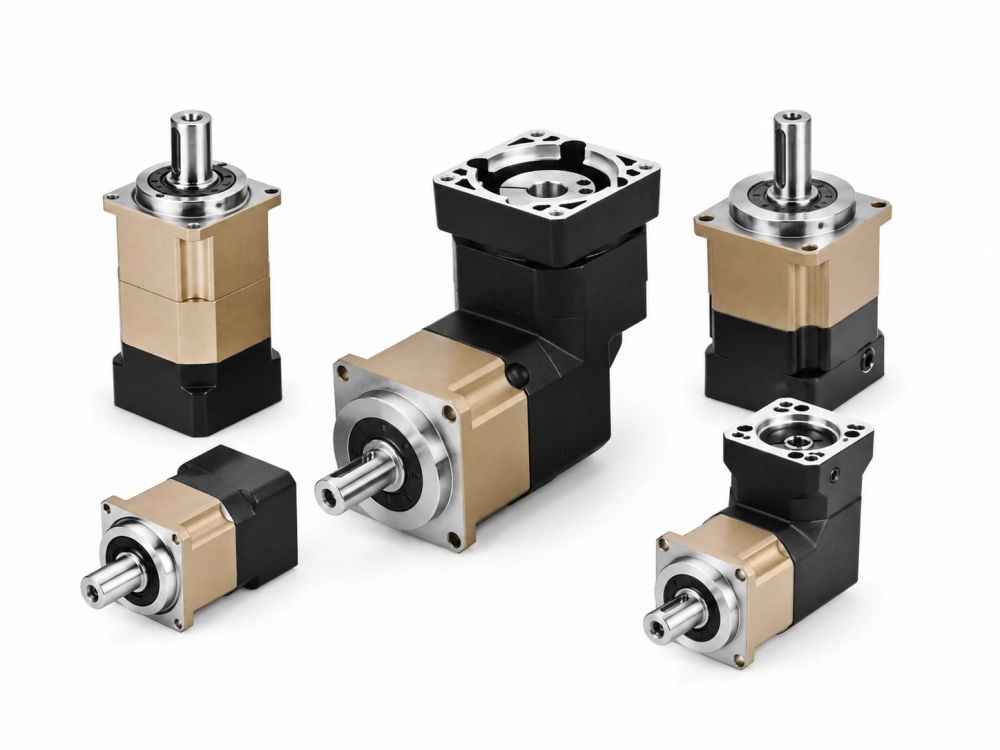
What Is a Planetary Gearbox for Servo Systems?
A planetary gearbox is a compact transmission device that uses a sun gear, planet gears, and a ring gear to transfer power from a motor to a machine load. Because multiple gears share the transmitted force, planetary gearboxes can provide high torque capacity, compact dimensions, and good mechanical rigidity.
Servo motors are widely used in automation applications because they provide accurate speed and position control. However, many machines require lower output speed, higher torque, and better inertia matching than a servo motor can provide directly. A planetary gearbox helps adapt the motor performance to the actual machine requirements.
Why Servo Motion Systems Use Planetary Gearboxes
In precision automation equipment, the relationship between the motor and the mechanical load directly affects machine performance. Without proper matching, a servo motor may operate outside its ideal range, causing unstable movement, insufficient torque, or reduced positioning performance.
A planetary gearbox can improve the motion system in several ways:
- Torque increase: The gearbox reduces speed while increasing available output torque, allowing smaller servo motors to handle higher loads.
- Speed matching: Different machines require different operating speeds. The gearbox helps match the motor speed with the required machine movement.
- Improved inertia matching: The gearbox reduces the reflected inertia from the load, helping the servo motor respond more effectively.
- Higher positioning stability: Low backlash planetary gearboxes can reduce lost motion during acceleration, stopping, and direction changes.
- Compact installation: The planetary structure provides high torque density in a relatively small package.
Key Factors When Selecting a Planetary Gearbox
1. Gear Ratio
The gear ratio is one of the first factors to consider. A higher ratio provides greater speed reduction and higher output torque, while a lower ratio allows faster movement.
The correct ratio depends on the required output speed, machine cycle time, and servo motor operating range. Selecting a ratio that is too high may reduce machine speed, while selecting one that is too low may not provide enough torque.
2. Rated Torque and Peak Torque
Torque capacity is critical for reliable operation. The selected planetary gearbox should handle both normal operating torque and temporary peak loads caused by acceleration, emergency stops, or rapid direction changes.
Engineers should consider:
- Continuous working torque
- Acceleration torque
- Shock loads
- Required service life
3. Backlash Requirement
Backlash refers to the small amount of movement between gear teeth when the direction changes. In general machinery, small backlash may not create a problem. However, in servo positioning systems, robotics, inspection equipment, and indexing applications, low backlash is often important.
A low backlash planetary gearbox helps improve repeatability and positioning performance, especially when the machine frequently starts, stops, or reverses movement.
4. Rigidity and Mechanical Stability
Gearbox rigidity affects how accurately the system transfers motor movement to the load. A gearbox with good torsional stiffness can better maintain positioning accuracy when external forces or changing loads occur.
For applications such as CNC equipment, robotic axes, and precision assembly machines, rigidity is often as important as torque capacity.
5. Mounting Compatibility
The gearbox must match the servo motor and machine structure. Important installation factors include:
- Motor flange size
- Input shaft dimensions
- Output shaft configuration
- Installation direction
- Available machine space
Common Applications of Planetary Gearboxes in Servo Systems
Planetary gearboxes are widely used in automation industries where accurate and repeatable motion is required.
- Robotics: Used for robotic joints, rotary axes, and positioning mechanisms.
- CNC Machinery: Used in feed systems, tool changers, and precision movement applications.
- Packaging Equipment: Used for indexing, filling, sealing, and high-speed machine movements.
- Inspection Systems: Used where accurate positioning and repeatable movement are required.
- Assembly Automation: Used in transfer systems, rotary stations, and precision fixtures.
Inline and Right Angle Planetary Gearbox Options
Planetary gearboxes are available in different configurations depending on machine layout requirements.
An inline planetary gearbox is suitable when the motor and output shaft are aligned in the same direction. This configuration is commonly used where a simple and compact connection is preferred.
A right angle planetary gearbox is useful when installation space is limited or when the motor needs to be mounted from the side. This design can help create a more flexible machine layout.
For applications requiring compact servo transmission solutions, engineers can review right angle planetary gearbox as a reference for motion system design.
How to Match a Planetary Gearbox with a Servo Motor
Proper motor and gearbox matching requires considering the complete motion system rather than only the gearbox specification.
The main factors include:
- Motor rated power
- Motor speed
- Load weight and inertia
- Required acceleration time
- Positioning accuracy
- Operating environment
A correctly matched planetary gearbox allows the servo motor to operate more efficiently while improving machine response and stability.
Planetary Gearbox Selection Mistakes to Avoid
- Choosing only by motor size without checking load conditions.
- Ignoring peak torque during acceleration.
- Selecting an incorrect gear ratio that limits machine performance.
- Overlooking backlash requirements for precision applications.
- Ignoring installation space and mounting direction.
FAQ
Is a planetary gearbox suitable for servo motors?
Yes. Planetary gearboxes are commonly used with servo motors because they provide torque increase, speed reduction, compact structure, and improved motion control performance.
Why is low backlash important for servo applications?
Low backlash helps reduce lost movement during direction changes, improving repeatability and positioning accuracy.
How do I choose the correct planetary gearbox ratio?
The correct ratio depends on required output speed, torque demand, machine cycle time, and servo motor operating conditions.
What industries use planetary gearbox systems?
Planetary gearboxes are commonly used in robotics, CNC machines, packaging equipment, inspection systems, and automated assembly machines.
Conclusion
Choosing the right planetary gearbox for a servo motion system requires a complete understanding of torque, speed, backlash, rigidity, mounting requirements, and application conditions.
A properly selected gearbox can help improve machine performance, increase reliability, and create a more efficient motion control system. For automation engineers and equipment designers, planetary gearbox selection should always consider the relationship between the motor, gearbox, and final mechanical load.