Gearbox Drive Systems for Reliable Industrial Motion
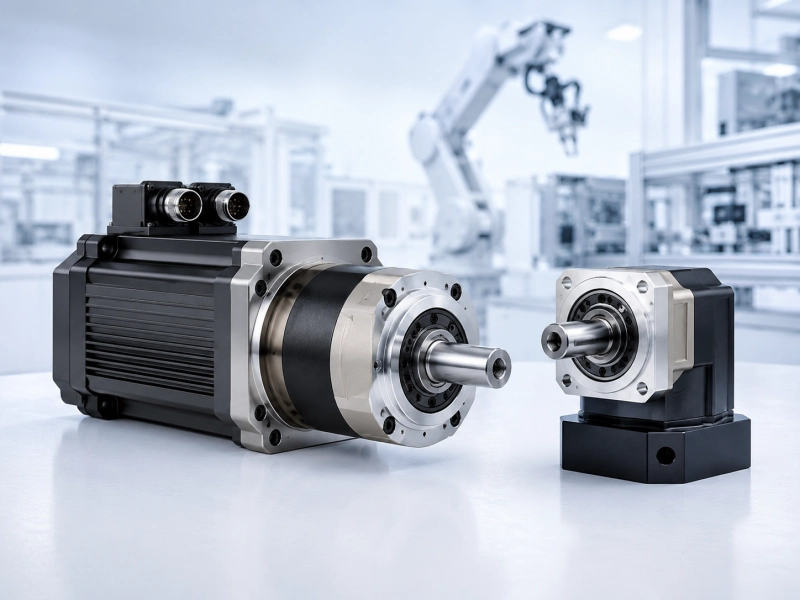
A gearbox drive system connects motor power with real machine movement. It helps control output speed, increase usable torque, improve mechanical matching, and support stable operation in automation equipment, robotics, CNC machines, packaging lines, conveyors, and rotary positioning systems.
What Makes a Gearbox Drive System Important?
In an industrial machine, the motor is only one part of the drive chain. The gearbox decides how motor speed and torque are delivered to the load, and this directly affects machine response, positioning behavior, operating smoothness, and long-term reliability.
Torque Delivery
A gearbox drive converts high-speed motor rotation into stronger output torque, helping machines move heavier loads, accelerate smoothly, or hold position more effectively.
Ratio Matching
The gear ratio helps match motor speed to the working speed of the machine, reducing unnecessary motor stress and improving the usable motion range.
Precision Control
In servo systems, backlash, rigidity, inertia, and mounting accuracy all influence how precisely the driven mechanism follows the command signal.
How a Gearbox Drive Works
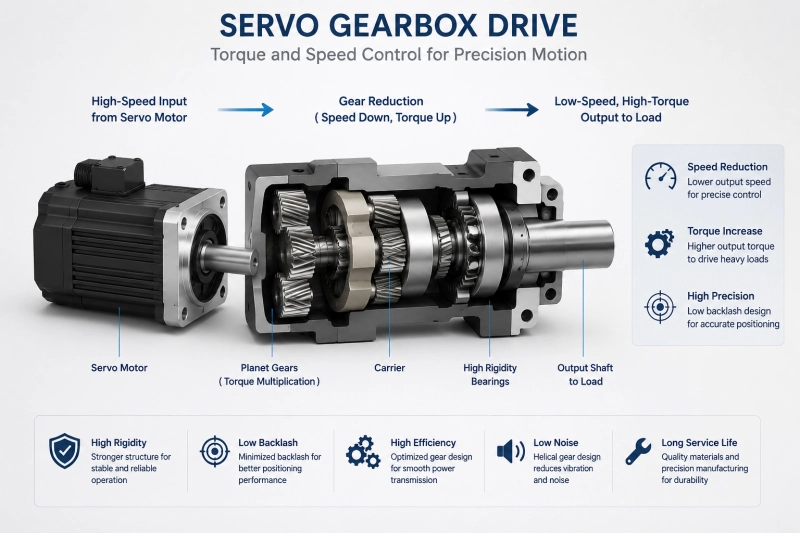
A gearbox drive receives rotation from a motor input shaft and transfers it through a gear set. The output speed is reduced according to the ratio, while output torque is increased within the limits of gearbox design, efficiency, and load condition.
- The motor provides high-speed rotational power.
- The gearbox changes speed and torque through gear engagement.
- The output shaft transfers controlled motion to the machine.
- The driven load receives motion suited to the application.
Common Gearbox Drive Configurations
A gearbox drive is selected according to installation space, motor type, load direction, torque demand, speed ratio, and accuracy requirement. The right configuration should fit both the mechanical layout and the motion goal.
| Configuration | Typical Use | Main Advantage | Selection Note |
|---|---|---|---|
| Inline Gearbox Drive | Servo axes, conveyors, automation modules, CNC auxiliary mechanisms | Straight motor-to-load layout with compact transmission | Suitable when input and output shafts can remain on the same axis |
| Right Angle Gearbox Drive | Compact machines, side-mounted motors, packaging systems, limited-space layouts | Changes power direction by 90 degrees | Useful when the motor cannot be installed in line with the driven shaft |
| Planetary Gearbox Drive | Robotics, indexing units, servo positioning, high-torque automation | High torque density and good rigidity in a compact body | Often selected when torque, stiffness, and size must be balanced |
| Rotary Positioning Drive | Indexing tables, inspection equipment, assembly fixtures, rotary stations | Supports controlled angle positioning | May use a hollow rotary table or rotary actuator depending on layout needs |
How to Select a Gearbox Drive System
A reliable gearbox drive selection should start from the machine requirement, not only from the motor power. The following steps help narrow the direction before comparing exact models.
Define the Load
Confirm load weight, inertia, movement type, duty cycle, acceleration, and whether shock or frequent start-stop motion exists.
Set the Ratio
Choose a ratio that converts motor speed into the required output speed while keeping the motor in a useful operating range.
Check Accuracy
For servo systems, consider backlash, torsional rigidity, repeatability, mounting alignment, and required positioning behavior.
Match the Layout
Decide whether the machine needs inline installation, right angle installation, hollow center routing, or rotary indexing structure.
Where Gearbox Drive Systems Are Used
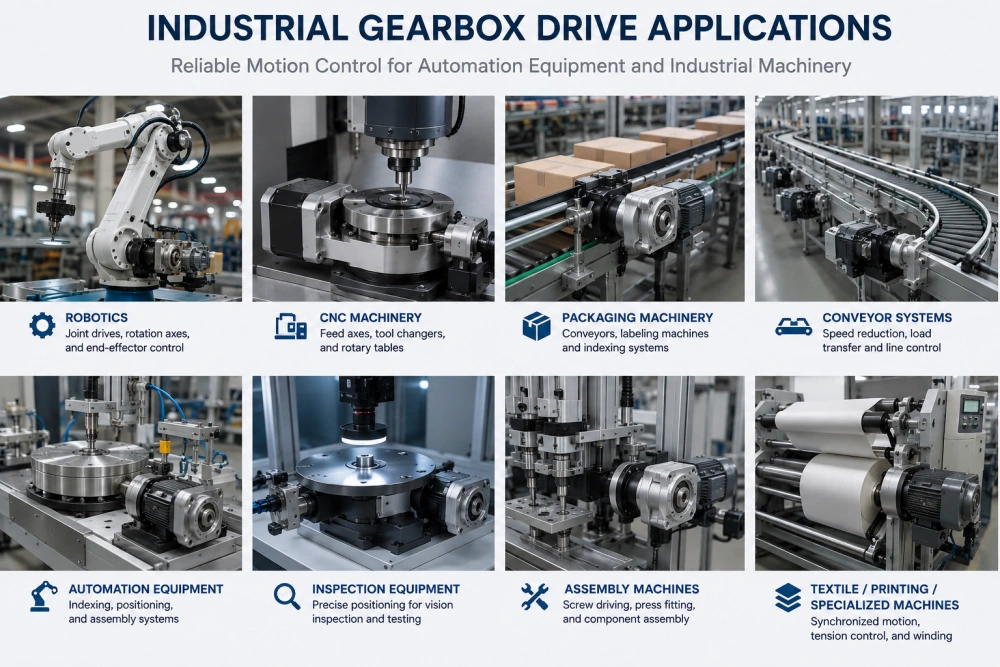
Gearbox drives appear in many machines where direct motor output is not suitable for the final load. They are common in systems that require controlled speed, stronger torque, compact installation, or repeatable positioning.
- Automation equipment and transfer stations
- Robotic joints, grippers, and rotary axes
- CNC machinery, tool changers, and positioning modules
- Packaging machines, labeling units, and indexing mechanisms
- Conveyors, assembly machines, inspection equipment, and test fixtures
Gearbox Drive vs Direct Drive
Direct drive can be useful in some high-end motion systems, but many industrial machines still use gearbox drives because they offer practical torque conversion, flexible installation, and cost-effective motor matching.
Motor Size Control
A suitable gearbox can allow a smaller motor to perform useful work by increasing output torque through ratio reduction.
Layout Flexibility
Inline, right angle, and rotary drive designs make it easier to fit the transmission system into different machine structures.
Control Balance
A gearbox can improve inertia matching between motor and load, but backlash and rigidity must be considered carefully in servo systems.
Related Gearbox and Rotary Motion Resources
Gearbox-drive.com provides general gearbox drive knowledge. For detailed product pages and model selection, the following related resources may help buyers and engineers continue their research.
Need Help Understanding a Gearbox Drive Application?
Contact Gearbox Drive if you are comparing gearbox drive systems, servo gearbox layouts, planetary gearbox applications, right angle transmission options, or rotary motion solutions for industrial automation.