Gearbox Drive Applications for Automation Equipment
Gearbox drive systems are used in machines that need controlled speed, stronger output torque, compact installation, and stable motion transfer. From robotic axes to conveyors and rotary indexing units, the right gearbox drive helps convert motor power into practical industrial movement.
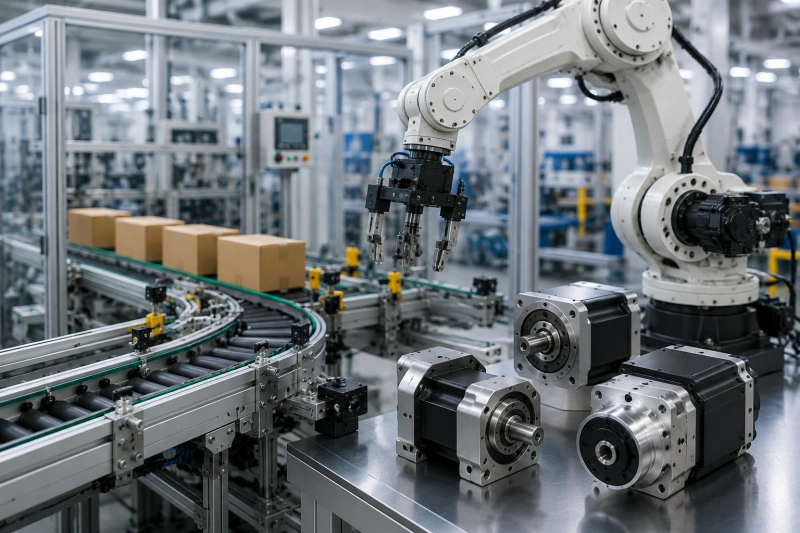
Where Gearbox Drives Create Value
In many industrial systems, the motor alone does not match the load. A gearbox drive helps the machine obtain the output speed, torque level, direction, and positioning behavior needed for reliable operation.
Motion Conversion
Gearbox drives convert motor output into machine-ready speed and torque, making the drive chain more suitable for real working loads.
Space Adaptation
Inline, right angle, and rotary drive layouts help equipment designers fit transmission components into compact machine structures.
Stable Operation
A suitable gearbox drive supports smoother acceleration, better load handling, and more consistent mechanical response.
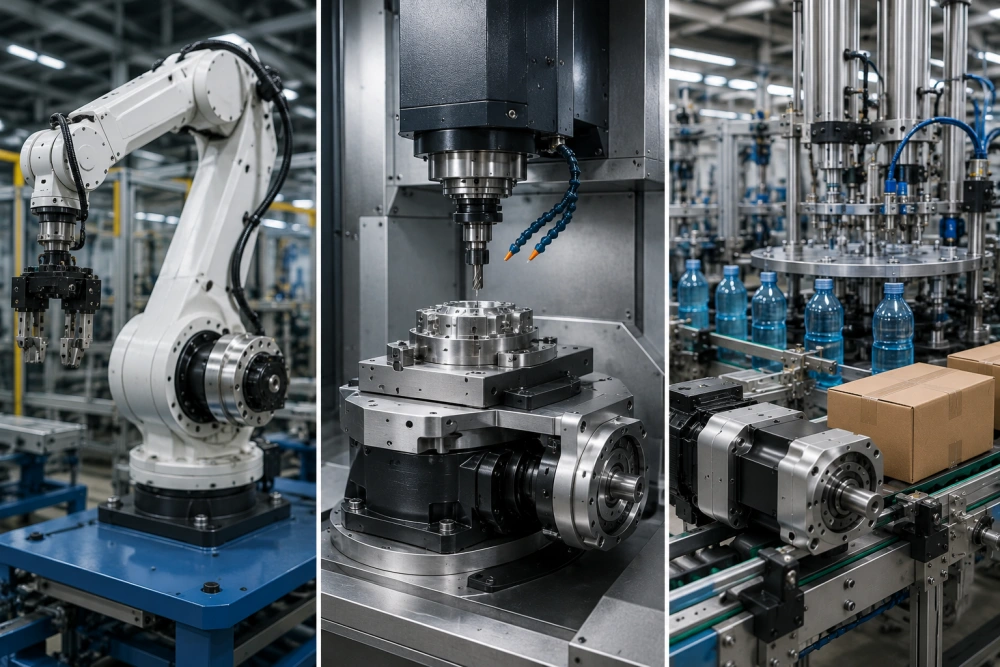
Applications in Robotics, CNC Machinery, and Packaging
These applications usually require repeated movement, controlled acceleration, compact drive layout, and reliable torque transmission. Gearbox drive selection must consider both the motor side and the mechanical load side.
Robotics
Gearbox drives are used in robotic joints, rotation axes, grippers, end-effectors, and auxiliary positioning modules where compact torque and motion response are important.
- Joint rotation and compact axis movement
- End-effector positioning and load control
- Servo gearbox matching for repeatable motion
CNC Machinery
CNC equipment may use gearbox drives in tool changers, feed mechanisms, rotary tables, auxiliary axes, and positioning systems that require controlled output and mechanical stability.
- Tool changer and auxiliary drive systems
- Rotary table and indexing support
- Feed axis and positioning mechanism support
Packaging Equipment
Packaging systems often combine speed, timing, and repeated movement. Gearbox drives are used in conveyors, labeling machines, filling lines, sealing units, and rotary stations.
- Conveyor and product transfer motion
- Labeling, sealing, and feeding units
- Rotary indexing and intermittent movement
Main Industrial Application Areas
Gearbox drive systems are selected differently depending on whether the machine needs continuous movement, intermittent indexing, precise positioning, heavy load transfer, or compact installation.
Automation Equipment
Used in transfer lines, pick-and-place units, assembly stations, lifting modules, and multi-axis production equipment.
Robotic Systems
Supports joint drives, wrist rotation, gripper motion, positioning modules, and compact servo-driven robot mechanisms.
CNC Machines
Applied in rotary tables, feed systems, tool changers, auxiliary axes, and machine tool positioning structures.
Packaging Lines
Helps control product transfer, film feeding, labeling, filling, capping, sealing, and synchronized motion stages.
Conveyor Systems
Converts motor speed into stable output torque for continuous transportation, intermittent movement, or load transfer.
Rotary Indexing
Used where repeated angle positioning is required, such as inspection stations, assembly fixtures, and turntable systems.
Inspection Equipment
Supports camera positioning, rotary inspection tables, measuring devices, and repeatable test fixture movement.
Assembly Machines
Provides drive support for pressing, screw fastening, alignment, component transfer, and controlled rotary motion.
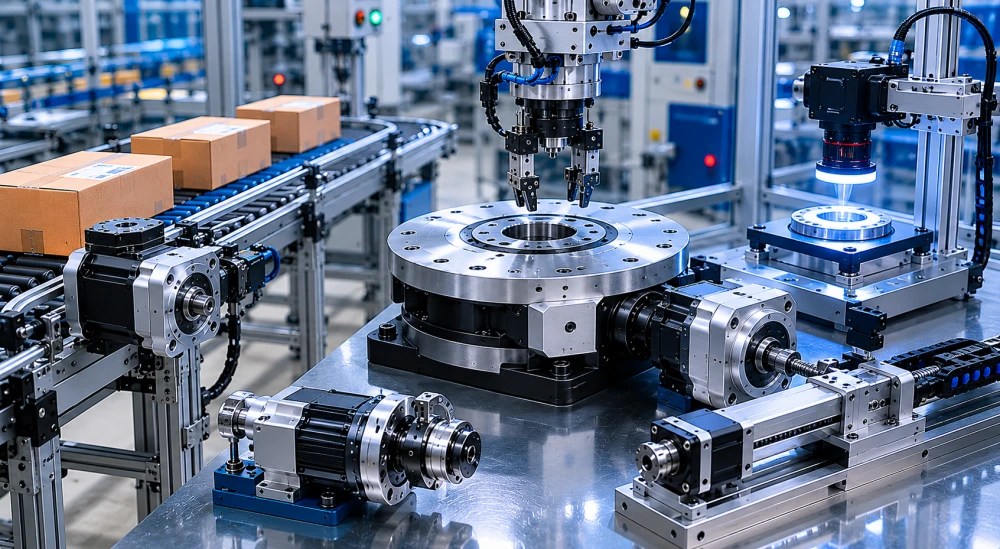
Applications That Need Continuous or Intermittent Motion
Some machines need continuous running, while others need stop-and-go movement, rotary indexing, or repeated positioning. The gearbox drive should be selected according to how the load moves, not only by motor power.
- Conveyors need stable torque and reliable running.
- Rotary indexing systems need repeatable angle positioning.
- Inspection systems need smooth and controlled motion.
- Assembly machines need durable operation under repeated cycles.
What to Check Before Selecting a Drive
Different applications place different demands on the gearbox. A packaging line may focus on timing and reliability, while a robotic axis may focus on compact torque and backlash control.
- Load inertia and required output torque
- Output speed and expected gear ratio
- Mounting direction and available machine space
- Backlash, rigidity, and positioning requirement
- Duty cycle, shock load, and working environment
Application-Based Gearbox Drive Selection Flow
A practical gearbox drive selection process begins with the machine task, then moves to torque, speed, ratio, accuracy, and layout. This helps reduce wrong model choices during early project planning.
Identify the Machine Task
Define whether the system is conveying, indexing, rotating, lifting, pressing, feeding, or positioning.
Confirm Load Behavior
Check load inertia, acceleration, running time, cycle frequency, and whether shock loading may occur.
Choose Drive Layout
Decide whether the machine needs inline installation, right angle output, hollow center routing, or rotary indexing.
Review Accuracy Needs
Consider backlash, rigidity, repeatability, and how much positioning error the application can accept.
Related Product Resources for Application Research
Gearbox-drive.com provides application-level information. For detailed product models, buyers and engineers may continue research through related industrial motion solution websites.
Need Help with a Gearbox Drive Application?
Contact Gearbox Drive if you are comparing gearbox drive applications, servo reducer layouts, planetary gearbox options, rotary indexing systems, or motion control components for industrial automation.